 100 Gigabit Ethernet (or 100GbE) and 40 Gigabit Ethernet (or 40GbE) are high-speed computer network standards developed by the Institute of Electrical and Electronics Engineers (IEEE). They support sending Ethernet frames at 40 and 100 gigabits per second over multiple 10 Gbit/s or 25 Gbit/s lanes. Previously, the fastest published Ethernet standard was 10 Gigabit Ethernet. They were first studied in November 2007, proposed as IEEE 802.3ba in 2008, and ratified in June 2010. Another variant was added in March 2011.
Wednesday, December 5, 2012
100 Gigabit Ethernet
100 Gigabit Ethernet (or 100GbE) and 40 Gigabit Ethernet (or 40GbE) are high-speed computer network standards developed by the Institute of Electrical and Electronics Engineers (IEEE). They support sending Ethernet frames at 40 and 100 gigabits per second over multiple 10 Gbit/s or 25 Gbit/s lanes. Previously, the fastest published Ethernet standard was 10 Gigabit Ethernet. They were first studied in November 2007, proposed as IEEE 802.3ba in 2008, and ratified in June 2010. Another variant was added in March 2011.
Tuesday, December 4, 2012
PPPoE
PPPoE (Point-to-Point Protocol over Ethernet) is a specification for connecting multiple computer users on an Ethernet local area network to a remote site through common customer premises equipment, which is the telephone company's term for a modem and similar devices. PPPoE can be used to have an office or building-full of users share a common Digital Subscriber Line (DSL), cable modem, or wireless connection to the Internet. PPPoE combines the Point-to-Point Protocol (PPP), commonly used in dialup connections, with the Ethernet protocol, which supports multiple users in a local area network. The PPP protocol information is encapsulated within an Ethernet frame.
Monday, December 3, 2012
Gigabit Ethernet
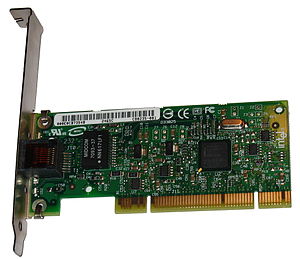
Gigabit Ethernet is carried primarily on optical fiber (with very short distances possible on copper media). Existing Ethernet LANs with 10 and 100 Mbps cards can feed into a Gigabit Ethernet backbone. An alternative technology that competes with Gigabit Ethernet is ATM. A newer standard, 10-Gigabit Ethernet, is also becoming available.
Sunday, December 2, 2012
Advanced networking
.jpg/450px-Coreswitch_(2634205113).jpg)
Saturday, December 1, 2012
Bridging and switching

What Are Bridges and Switches?
Bridges and switches are data communications devices that operate principally at Layer 2 of the OSI reference model. As such, they are widely referred to as data link layer devices.Bridges became commercially available in the early 1980s. At the time of their introduction, bridges connected and enabled packet forwarding between homogeneous networks. More recently, bridging between different networks has also been defined and standardized.
Subscribe to:
Posts (Atom)